Published October 18, 2026 · Doorcount
What a deal memo is
A multifamily deal memo is a short written case for or against one property at one price. It turns a listing, a rent roll and public records into a few pages you can read before you make an offer: what the building likely earns, what you could pay, how you might finance it, and what could go wrong.
A good memo shows its work. Every number has an assumption next to it, so you can disagree with a line and see what changes. It is a screening document, not a valuation and not a decision.
The sections to expect
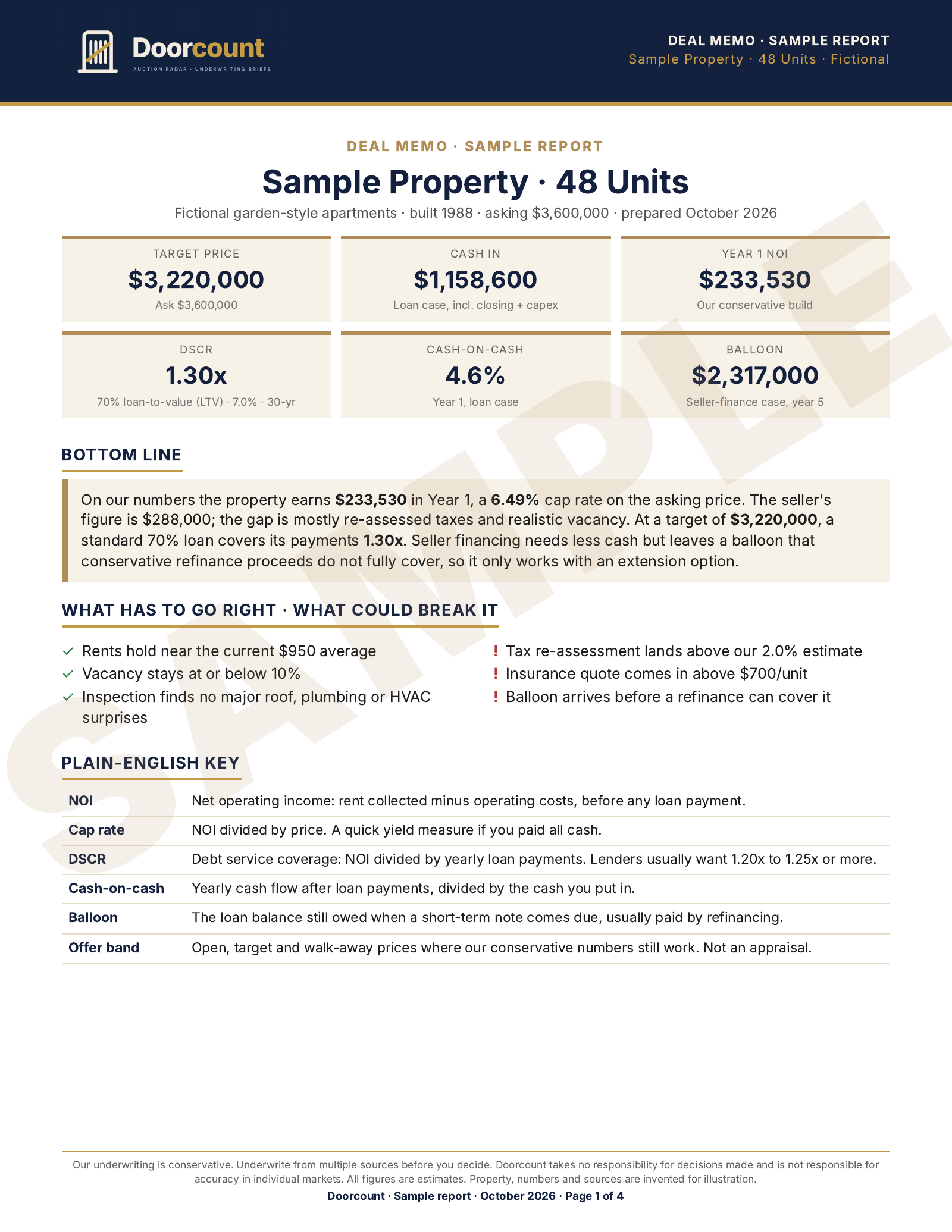
1. The deal at a glance and the bottom line
A target price, the cash you would need, Year 1 net operating income (NOI), debt coverage, cash-on-cash return and any balloon payment, followed by a few sentences that say what has to go right and what could break the deal.
2. A plain-English key
Short definitions of NOI, cap rate, DSCR, cash-on-cash, balloon and offer band, so a first-time buyer can follow every page.
3. The NOI build, line by line
Rent from the current rent roll (not "market" rent), a vacancy allowance, then every operating cost: taxes, insurance, management, repairs, utilities, payroll, admin and reserves. Conservative memos re-assess taxes at the purchase price and set floors for vacancy and total costs.
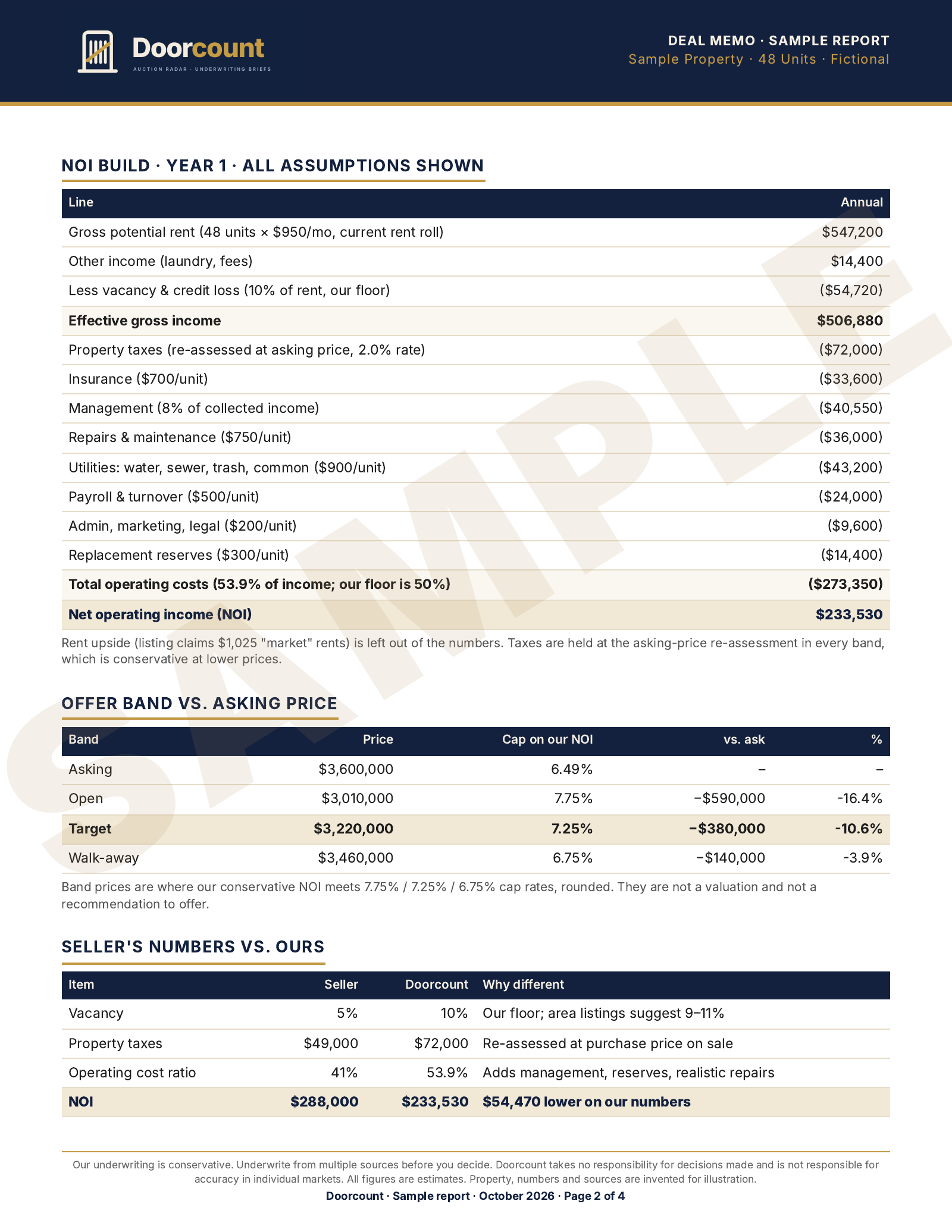
4. Offer band vs. asking price
Open, target and walk-away prices where the conservative numbers still work, shown next to the asking price. See offer band vs. asking price for how the band is built.
5. Seller's numbers vs. ours
A side-by-side of the seller's vacancy, taxes, cost ratio and NOI against the memo's, with the reason for each difference.
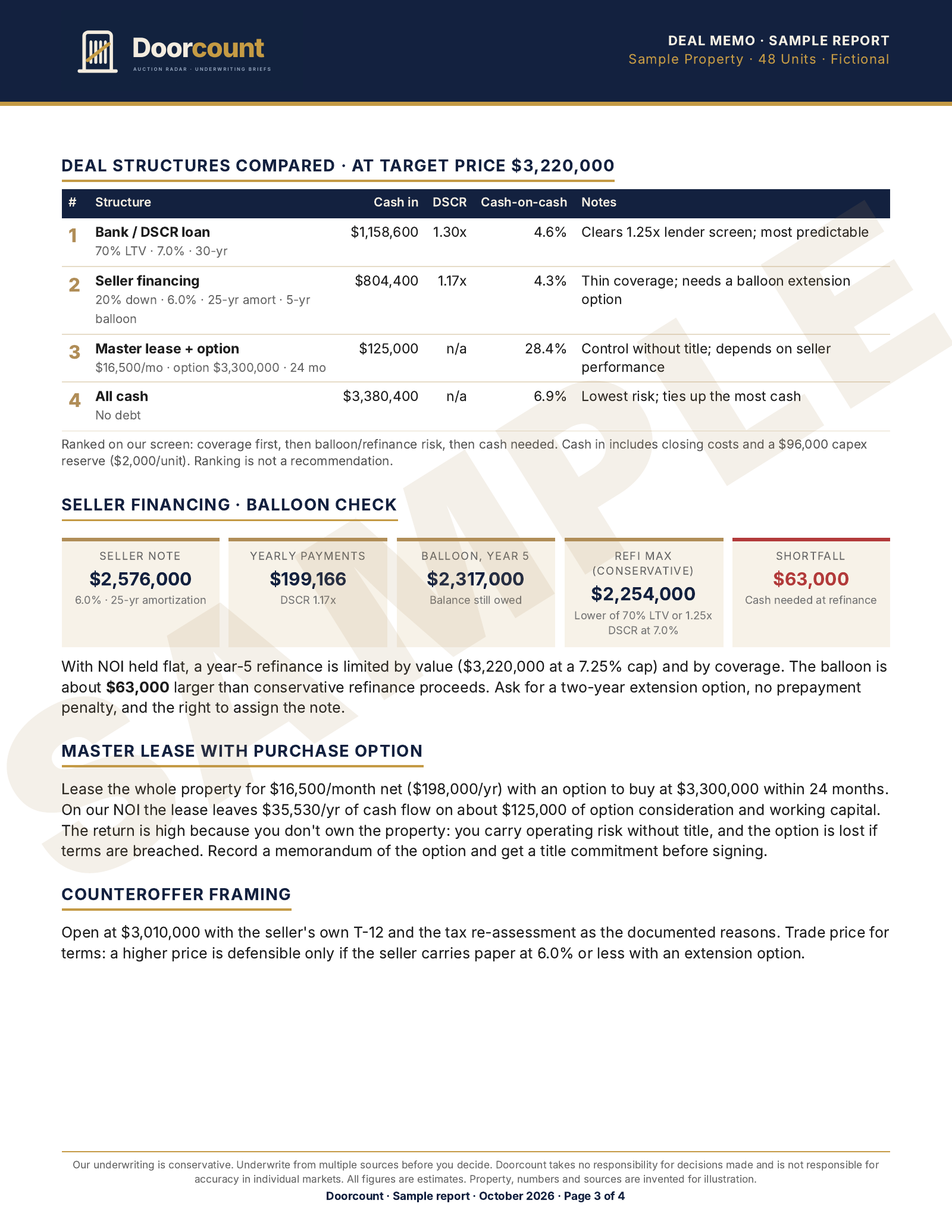
6. Deal structures compared
A bank or DSCR loan, seller financing, a master lease with an option, and all cash, each with cash in, coverage and return, plus a balloon and refinance check for any short-term note.
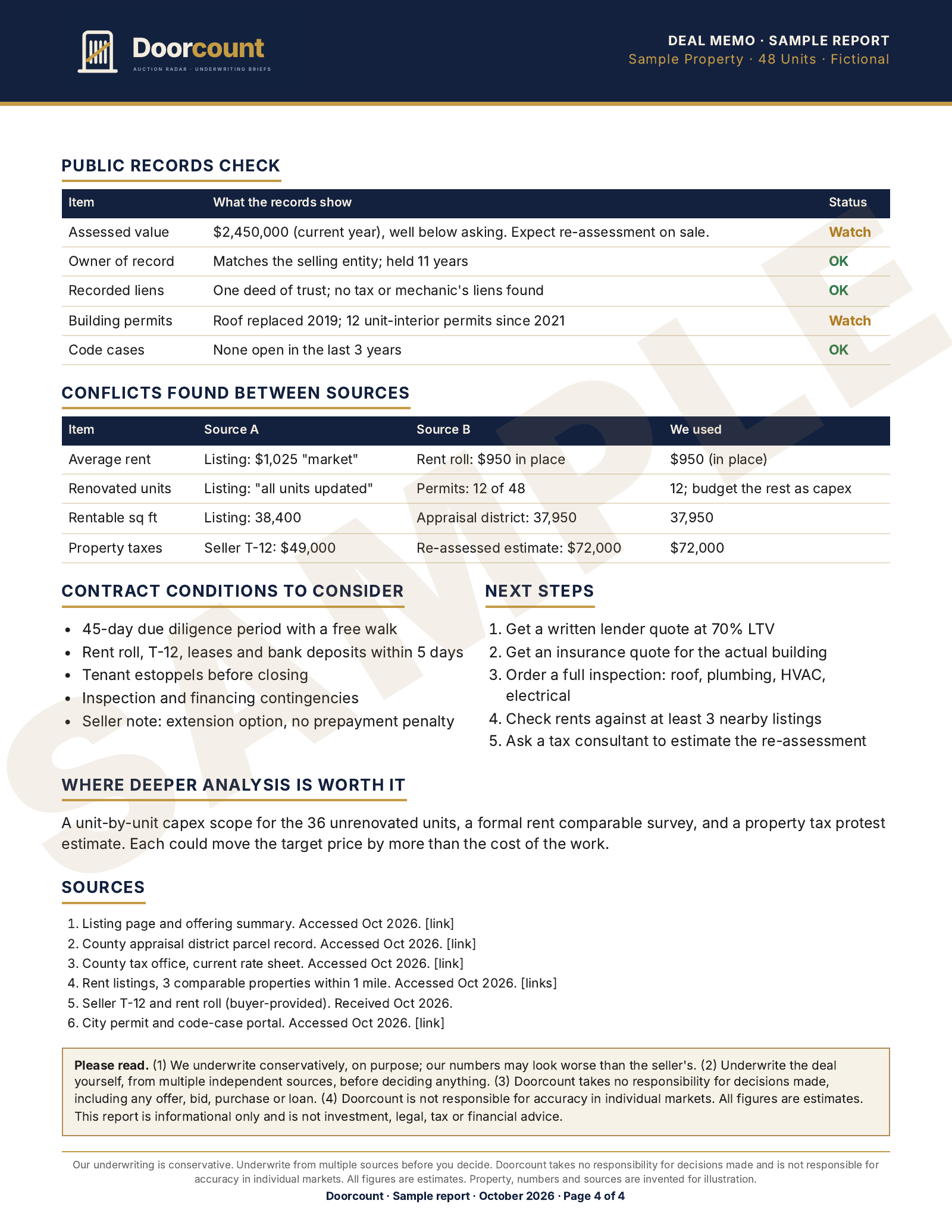
7. Public records and conflicts between sources
Ownership, tax and permit checks, and a list of places where the listing, the records and the rent data disagree.
8. Contract conditions, next steps and sources
Conditions worth considering in the purchase contract, the next documents to request, and dated sources for every outside number.
What a deal memo is not
- It is not an appraisal or a valuation. The offer band is where conservative numbers still work, not what the property is worth.
- It is not investment, legal, tax or financial advice, and not a recommendation to buy, bid or finance.
- It does not replace an inspection, a lender's underwriting, title work or an attorney's review of the contract.
Run the numbers yourself first
The free Multifamily Deal Check uses the same cautious approach for small buildings, and the Large Apartment Deal Check covers 20+ units. If you want the full memo on one property, start with the sample.
Please read. Our underwriting is conservative. Always underwrite from multiple sources before you decide. Doorcount takes no responsibility for your decisions and isn't responsible for accuracy in individual markets.